
Home EV charger installation: a practical guide
Charging speeds, switchboard capacity and what a compliant installation involves.
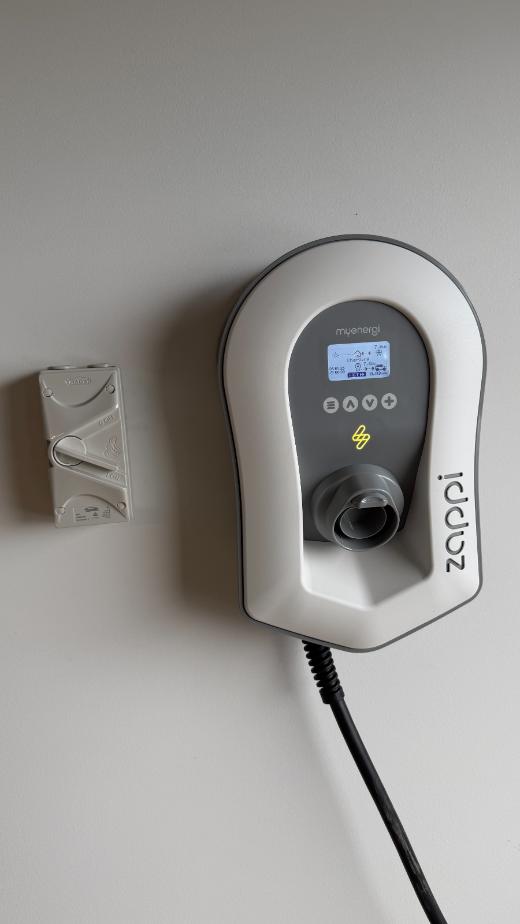
Most people come to us having already chosen a car and assuming the charger is the simple part. It usually is, but the decisions that matter are made before anything gets mounted on the wall: how fast you actually need to charge, and whether your switchboard and supply can carry it.
How fast do you actually need to charge?
There are three practical options for a home.
A standard power point. Every EV comes with a portable cable that plugs into a normal socket. It is the slowest option by a wide margin, adding only a small range overnight, but for a plug-in hybrid or a car doing short daily trips it is sometimes genuinely enough. What it is not is a permanent solution on an old circuit: charging draws close to the rating of a general power outlet for hours at a time, which is a much harder duty than the circuit was designed around. If this is your plan, have the circuit checked rather than assumed.
A single-phase wall charger. The common choice. On a typical single-phase supply this adds enough range overnight for almost any daily commute, and it will fully charge most cars between evening and morning. For the large majority of households this is the right answer.
A three-phase wall charger. Roughly three times the rate, but only if three-phase supply is already at the property. Converting a single-phase property to three-phase is a separate and considerably larger job involving the distributor, and it is rarely justified by home charging alone. It makes sense when the property is getting a supply upgrade for other reasons anyway.
The honest guidance: work out your real daily driving, not your worst-case road trip. Charging overnight at home is a different pattern from filling a tank, and most people find they need less speed than they expected. Road trips are what public fast charging is for.
The part that decides the job: your switchboard
A charger is a large, sustained load, and it is added to a board that was specified before anyone was charging a car at home. Before we quote, we look at:
- Spare capacity on the board, and whether there is physical room for the additional protective devices.
- RCD protection, which is required for this installation and is often absent on older boards. Chargers also need protection appropriate to the DC fault currents they can produce, provided either by the charger itself or by the protective device.
- The main switch and supply rating, and what else on the property draws heavily at the same time. An electric hot water system, air conditioning and an oven running together with a charger is the scenario worth checking.
- The cable route from the board to where the car parks. This is the single biggest driver of cost variation between otherwise identical jobs. A short run inside a garage is straightforward; a run to a detached garage or across a paved driveway is not.
Where capacity is genuinely tight, load management is often a better answer than a supply upgrade. Many chargers can monitor the property's total draw and throttle themselves to stay within the limit, which means you charge slightly slower on the rare occasions everything runs at once, rather than paying for a larger supply you need for a few hours a year.
Solar
If you have solar, it is worth choosing a charger that can divert surplus generation into the car rather than exporting it. This changes where your charging energy comes from during daylight hours, which matters more for households at home during the day than for those charging overnight. Not every charger does it, and the ones that do need a bit more thought at installation because they generally need to sense at the meter, not just at the charger.
What a compliant installation involves
A dedicated circuit from the switchboard, appropriate protection, cabling sized for a continuous load and the actual run length, secure mounting, testing on completion, and a Certificate of Electrical Safety. Depending on the charger, the supply and the property, notification to or approval from the electricity distributor may also be required, and we handle that as part of the job where it applies.
This is prescribed electrical work. It is not a job for a handyman or a keen owner, and a charger installed on an unverified circuit is a fire risk that runs unattended for hours every night.
Before you buy the charger
Talk to us first, or at least send a photo of your switchboard and tell us where the car parks. It takes a few minutes and it occasionally saves people from buying a three-phase unit for a single-phase house.
Get in touch and we will tell you what your property can take.